
Love My Community: Kearney
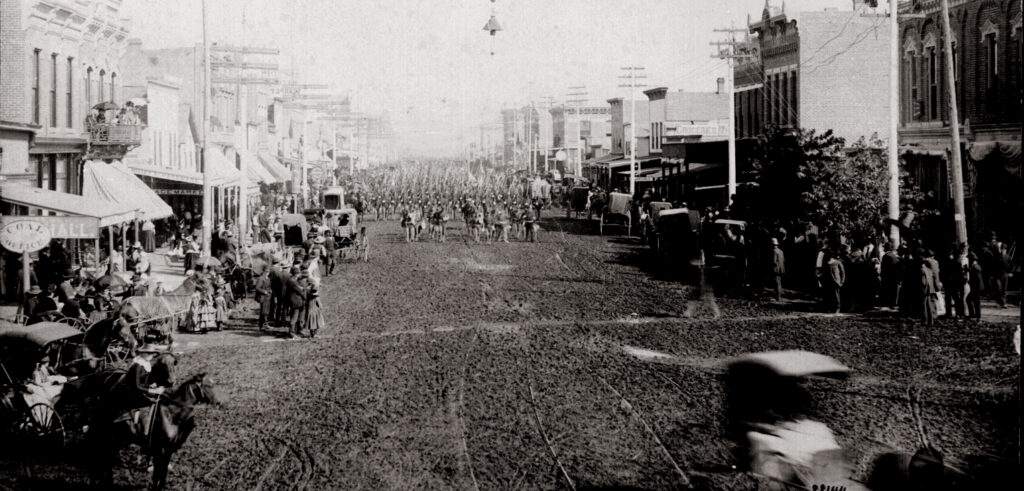
Kearney Today.
The city of Kearney, located in the heart of Nebraska, in the heart of the verdant Platte River Valley, is an easy community to love. One of the cornerstones of Nebraska with a respected reputation for being a smaller city with big city amenities and bigger dreams, Kearney has always been known for its aspirational vision of the future.
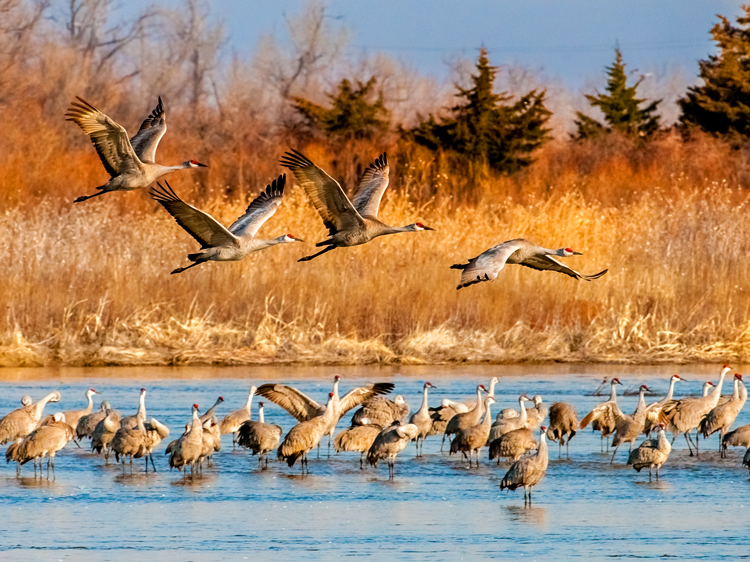
Maybe it’s because so much around here takes flight.
The city may best be known for the annual spring migration of hundreds of thousands of sandhill cranes that converge upon the region on their northward trek, the spectacle attracting worldwide visitors for 4-6 weeks. But over the past 150 years, there’s been so much more that has made people flock here and stay––sometimes for generations.
The community is a wonderful mix of young and old, new and historic, with a robust downtown serving as a gateway for a vibrant retail and services sector as you move north along the 2nd Avenue corridor. Stately older homes co-mingle with the newly built along tree-lined cul-de-sacs and mix in with a variety of multi-family residential options to meet the needs of college students.
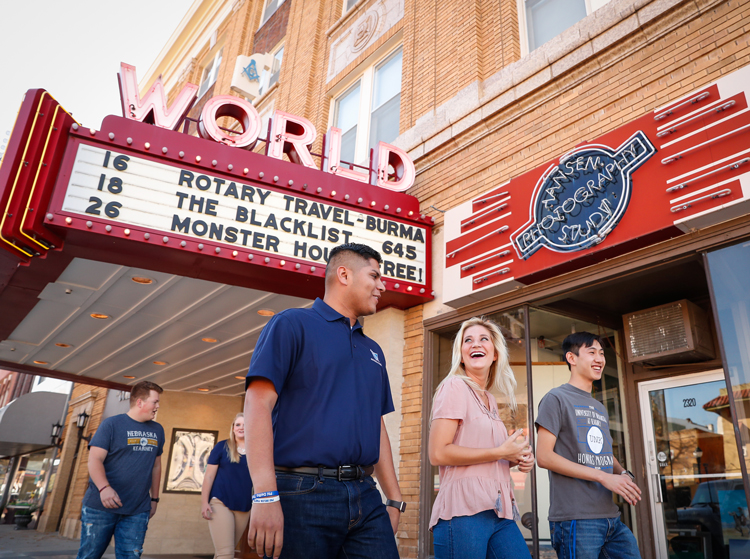
Kearney offers one of the state’s most diverse populations and economies, driven by the University of Nebraska-Kearney, the University Medical Center’s Allied Health program, two hospitals that deliver care from over 150 physicians representing nearly every major medical specialty, a strong manufacturing community, the state’s largest hospitality center with 1,800 hotel rooms, dozens of restaurants, plenty of professional career opportunities and a robust agricultural industry. The community also offers expansive city parks, five golf courses, art galleries, museums, community theater, festivals and much more to enhance the area’s quality of life.
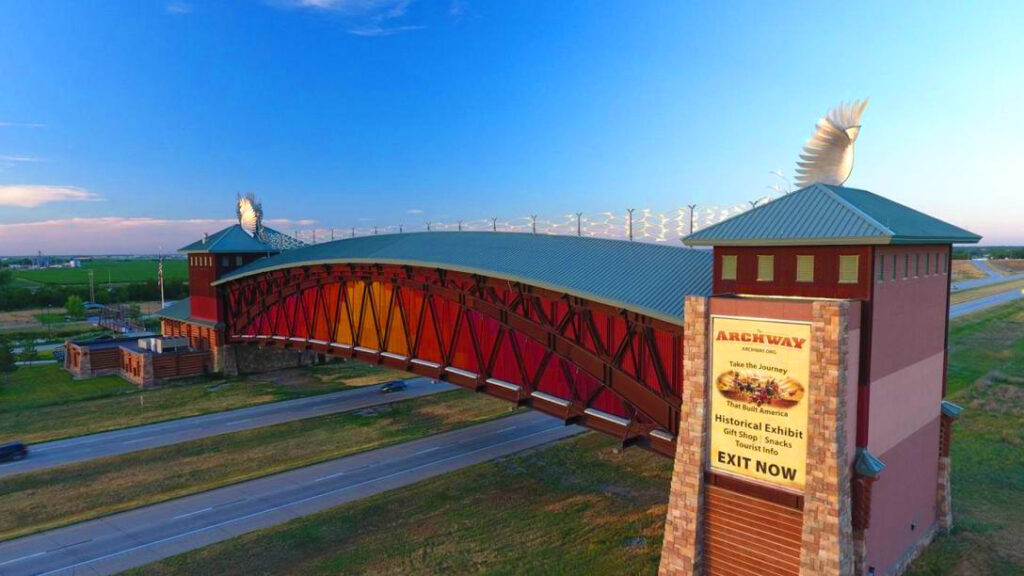
From a bird’s eye view, you’ll notice the Platte River and I-80 snaking their way along the southern edge of Kearney. And from the Interstate, visitors are welcomed by the famed Archway that invites them to stop and learn about the pioneer history of our region.
History: a Town of Visionaries.
The town was established in 1873, with just a handful of homes and businesses to support the growing westward development of the railroad after the Civil War had ended. The town was named after nearby Fort Kearny, the outpost for Colonel Stephen W. Kearny. The name Kearney with the extra “e” was the postman’s misspelling that eventually just stuck.
The location just north of the Platte River and along the main trail heading west, as well as the rich agricultural soil, made the town a great place for many settlers to grow roots.
Kearney’s early visionaries brought the first electric street cars west of the Mississippi River, a cotton mill, vegetable processing plants, hydro-generated electricity and more.
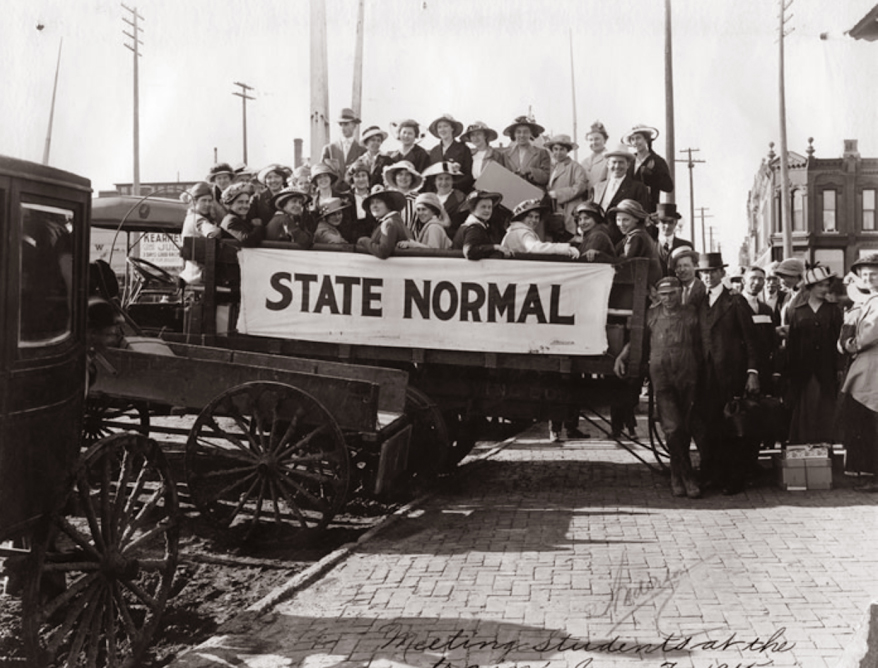
In 1903, the town was the choice of the Nebraska state legislature for the home of Kearney Normal School, a four-year institution of higher learning that is now the University of Nebraska-Kearney with nearly 7,000 ambitious students who come from just about every county in the state, from all over the U.S. and from countries throughout the world.
A Day in a Life.
Kearney is a bustling, modern community comprised of people of all ages and all walks of life, a varied combination of friendly, vibrant, artistic, hardworking folks.

Longtime resident Bruce Blankenship takes us on a tour through the city, where you’ll see university students with their backpacks and boundless enthusiasm, traffic headed to myriad shopping outlets and restaurants, employees making high-performance engines and parts for major car manufacturers, and retirees enjoying a carefree lifestyle.
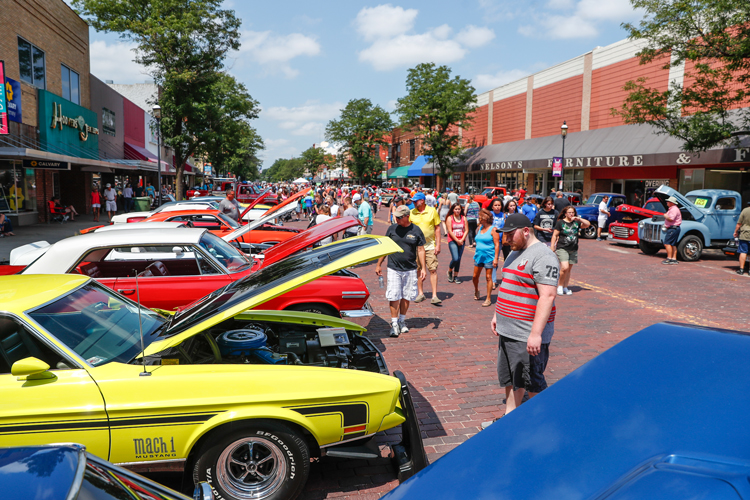
Downtown people still window shop at a wide variety of locally owned specialty stores, storeowners sweep the walks in preparation for another busy day, and traffic slowly works its way up and down the brick streets of Central Avenue. Neighborhoods are pleasant with children playing in the front yards, neighbors gathering to visit on the edge of streets, and homeowners mowing lawns, trimming bushes and touching up paint.
One center of activity is Yanney Park, recognized as one of the nicest between Omaha and Denver, featuring two splash parks, playgrounds, an activity center, paddleboats, fishing and a senior center.
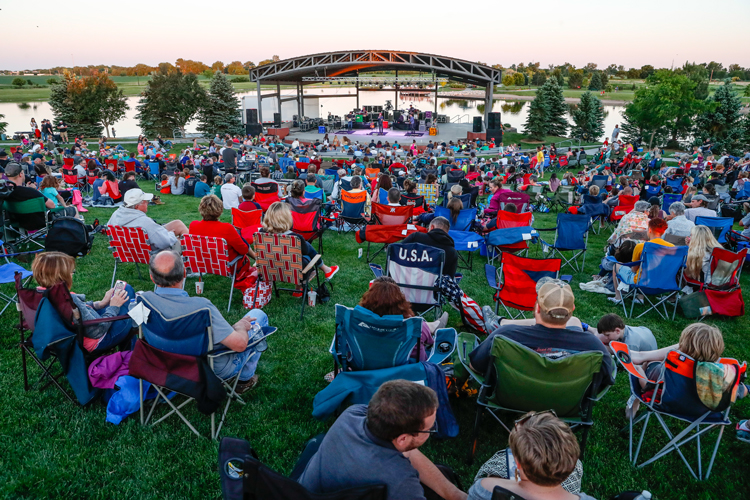
You’ll find noisy school playgrounds, people quiet in prayer, and couples hand-in hand on the 26.1 mile hike/bike trail, parents cheering on their children at venues throughout the community, and people gathered in lawn chairs for Sunday evening concerts at Harmon Park.
On the outskirts of town you’ll find proof of the importance of agriculture in the fields of corn, soybeans and alfalfa. And, inbound, you’ll often see trucks in traffic delivering goods to Kearney businesses, and commuters from small towns around Kearney making their way to work, a doctor’s appointment or a shopping center.
Giving a Hand.
Lots of communities work together to tackle projects large and small, but according to Bruce Blankenship, Kearney may have invented that approach. In the 1970s, the people of Kearney used the theme Can Do Country. “I still have a bumper sticker with the saying on it,” Bruce Blankenship is proud to admit. “That attitude has defined our community. Still does.”
When a need arises or a problem crops up, people in Kearney roll up their sleeves, share ideas and get to work to make things happen.
One example of ordinary people doing extraordinary things: within hours of the recent flood in south Kearney, the university opened up student housing for displaced travelers and local residents with flood-ravaged homes; the Knights of Columbus fired up the grill and fed hamburgers to volunteers and those in need; a local sand and gravel operation brought in their heavy equipment, and volunteers with air boats rushed in to physically move hotel guests from flooded areas; The Salvation Army and Red Cross chipped in, while friends, businesses and volunteers catered lunch to the employees and workers of Younes Hospitality as they cleaned and repaired the flood damage in the Younes’ six hotels and large convention center.
This sort of community can-do spirit is a part of all aspects of the city––even the politics. Roger Jasnoch, Director of the Kearney Visitors Bureau for the past 33 years has seen a lot of collaborative problem solving at every level of the government. “Kearney is politically a very stable community,” he says. “Whether it’s the city, county and schools, or the joint city police and county sheriff, everybody works together to get the job done.”
The Future of Kearney.
There’s a lot more taking flight for the future in Kearney. For instance, the airport’s jet service now includes two flights a day to Denver and one flight a day to Chicago, allowing people to fly in and out of town on the same day.
Kearney has further developments planned to keep the town growing, especially when it comes to tourism, hospitality, conferences and conventions. A brand new 100,000 square feet convention center should be up and running by 2021, and 200 more hotel rooms will be added for visitors who come to our flourishing city.
The Bank.
Kearney State Bank and Trust Company was the precursor to Farmers & Merchants Bank. It opened in January 1976 with 18 local investors and directors including an attorney, builder, clothing store owner, trucking company executives, distributor and farmers, among others. Gerry Dunlap and Farmers & Merchants Bank took ownership in 2007, making Kearney the eleventh branch in the growing Bank operation and the first branch in Central Nebraska.
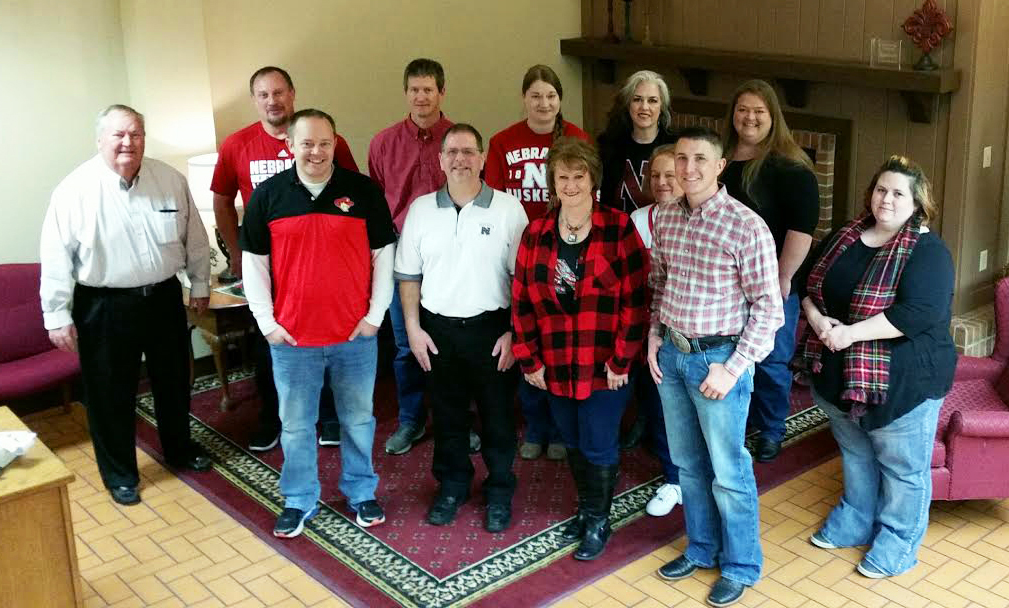
Farmers & Merchants Bank, Kearney Staff.
Brooklyn Walker is a Customer Service Representative in the teller line. She has a 15-year old son who is a freshman at Kearney High School. She likes to paint and draw, cook and spend time with her family.
Amy Kellogg, Personal Banker/Customer Service Representative, is married with two grown sons––one in Omaha, one in Kearney. She enjoys spending time with her family, flower gardening, and walking and riding on the hike/bike trails in town. She loves Kearney and all the amenities it has to offer.
Nick Baird, Sr. VP/Branch Manager, manages the staff and lending at the Bank. He’s married to his best friend and they have five children. They like doing family activities, such as taking the baby to the park and attending sporting events all over town, including over 50 baseball games this summer.
Doug Meyer is an IT Systems Administrator and an officer in the bank. He and his wife Angie have two sons, Evan and Spencer. He enjoys golf and traveling and has been a coach for the Dannebrog-Cairo-Boelus (DCB) junior and senior American Legion Baseball teams for a number of years.
Joyce Martin, Customer Service Representative, tackles a number of duties including teller scheduling. She’s been at the bank for 11 years. She says, “God gave her three children, all exactly 11 years apart.” She likes to paint and decorate and is a wonderful grandmother.
Cheryl Morgan, Assistant Operations Officer, has been working at the Kearney location since April 2000, making her the second-longest tenured employee in the office. She and her husband Randy have two children, Brook and Benjamin, and she loves watching sporting events, hanging out with friends, boating and baking.
Matt Schall is Vice President of home mortgages. He and his wife Kelly have four children and spend their time following their children’s athletic pursuits, including football, softball, baseball and basketball, often going in different directions to catch more than one child’s game.
Terree Warren is Vice President and runs the bank travel program. Terree has taken groups of bank customers to Africa, Argentina, Europe, China and Greenland, plus nearly every state in the USA. Her Mystery Tours are legendary and sell out within days. She has worked in this same building longer than any other employee.
Scott Vogler is Vice President/Loan Officer. He and his wife Lynette have three grown sons, a daughter, daughter-in-law and a granddaughter. He likes to travel, spend time with the family, attend car shows and airshows/fly-ins and trying new recipes on the grill.
Sherry Leech is a loan administrator doing double-duty with commercial/ag/consumer loans and the home mortgage department. She has two children and a grandchild. Sherry enjoys watching her son compete in trap shooting and helps with fundraising for the Ravenna Trap Shoot team.
Carmen Pate is a Customer Service Representative and one of the first people you see at the Bank. She’ll greet you with a friendly smile and a warm hello. A new resident to Kearney, she’s enjoying the adventure, from the local food, music and activities to the Children’s Museum.
Lisa Wilkinson is a Customer Service Representative in the teller line. She and her husband have a daughter who is a freshman at UNK and a member of Gamma Phi Beta sorority. Lisa likes to quilt, plant flowers, scrapbook, read, cook and boat, and would love to move closer to the ocean someday.
Bruce Blankenship is the Business Development Officer. He spends the bulk of his day thanking existing customers for their loyalty and visiting with prospective customers about the many products the Bank can offer. He and his wife Tammy have two grown children and two grandsons. Bruce has lived in Kearney for most of his life.
Roger Schubert is a loan administrator working with commercial, ag and consumer loans. He and his wife have two grown children and two (soon to be three) grandchildren. He has been the volunteer treasurer of the Kearney Basketball Club for years and he spends a lot of time in the bleachers cheering on the Lopers and Bearcats.
Winnie Hoes is a Customer Service Representative/Teller. She is the youngest of four children and has fur baby named Pepper. She loves “road tripping” and reading, and is an avid movie-goer. She hand folds thousands of origami cranes annually for cancer patients to enjoy and has recruited bank colleagues to help in the cause.
Charlotte Green is a Customer Service Representative and prides herself on meeting new people and helping solve problems. She has a son and daughter-in-law and an adorable grandson, Clayton. Her daughter Candace is an RN at CHI Hospital and they team up to play in a summer golf league together.
Justine Ellis is a recently hired Customer Service Representative in the teller line. She and her husband Les have two children and one grandchild. She came to FMB after years in bookkeeping. She likes hanging out with her grandchild and family best, but also enjoys horseback riding, sewing and reading.
Kim Sheldon is an administrative assistant and serves many roles in the Bank. She is married and they have one son, seven grandchildren and one more on the way. She and Jerry love to travel, including an annual trip to Cabo. Kim is involved with the church and helps with a program to acquaint new members into the Catholic Church.
Paula Medina is the Bank’s receptionist/switchboard operator. She is married with two children and five grandchildren. She is a great host and loves spending as much time as possible with her grandchildren. She likes to read and cook and undertook a project last year to make decorative Christmas trees for people in care homes.
John Zulkoski is a loan administrator in the home mortgage department. He has a kindergarten-age son. John is an avid outdoorsman and loves to hunt, fish, camp and ride three wheelers with his son. He formerly served on the Board of the Kearney Area Habitat for Humanity. John is also a licensed real estate agent.
Linda Meyers is a Customer Service Representative in the Bank’s back counter operation. She is married with four grown children, 16 grandchildren and one on the way, plus three foster grandchildren. Linda is known around the Bank for her clever Christmas gifts for her family.