
Love My Community: Superior
History of Superior.
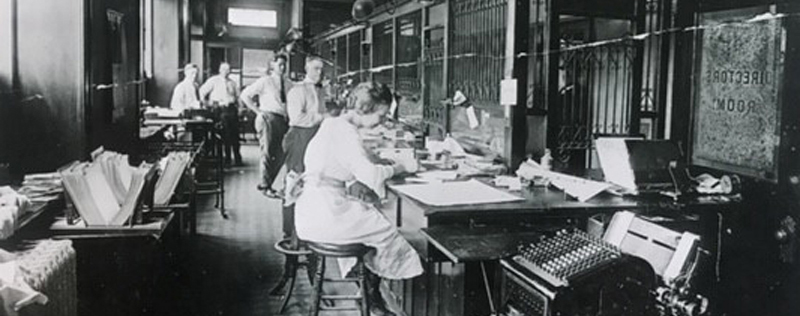
Named for the quality of its fertile land, the town of Superior is situated in the Republican River valley, 60 miles southeast of Hastings and just a mile from the Kansas border. Settlement began in the area in the late 1860s. The town was surveyed in 1875 and incorporated in 1879.
The entrepreneurial spirit was alive and well as the town began to grow. Merchants were doing a thriving business and the railroads began to take note. The first railroad to come to town was the Burlington Northern in 1880 with a main line between Kansas City and Denver. The railroad provided a jumpstart to the new town, allowing new industries to spring up.
At the peak of development in the 1940s, Superior’s population rose to 3,200, and the town boasted a hydroelectric facility, cement plant, flour mill and grain elevator, cheese plant, Coca-Cola® bottling plant, brick factory, two cigar factories, and many more prospering businesses.
Notable among these early companies was the Scoular Company, founded by Superior’s renowned Scoular family, and now a multi-national corporation. Eventually the town became an important railroad hub with five railroads serving the community and the region.
The “Victorian Capital of Nebraska.”
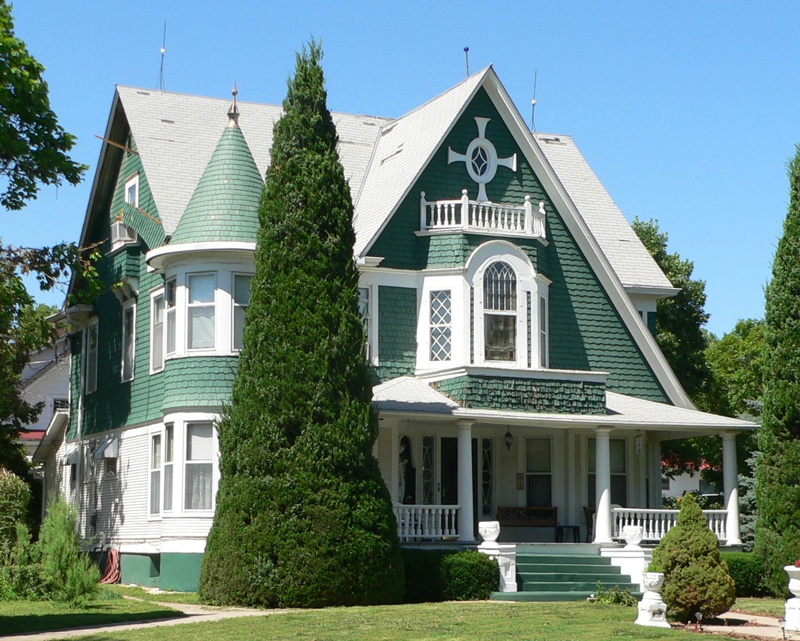
Much of the town has retained its Victorian charm from the prosperous early settlers in the late 1800s, who built homes and businesses of architectural splendor. Known as the “Victorian Capital of Nebraska,” Superior holds an annual Victorian Festival that attracts visitors from all over the state. The downtown area is listed in the National Register of Historic Places.
Superior Today.
The town is a reflection of contemporary rural America in many ways, as numerous industries have closed in recent decades. There are now only two railroads, and the population is just under 2,000. However, Superior is still a hub of commerce with two large grain elevators shipping over 20 million bushels annually, a hospital, three assisted living facilities and many retail merchants.
The hospital is a key feature of the town. It began with an endowment from Evelyn Brodstone and will soon undergo another major expansion, keeping it on the forefront of the medical field.
Evelyn Brodstone grew up in Superior in the early 1900s and went on to become a business executive working for Lord William Vestey, whom she later married. She has been a huge benefactor to the community with some of her endowments continuing to this day. Each year, the town honors Lady Vestey with a celebration on Memorial Day weekend that offers lots of activities throughout the town with many people attending.
Superior continues to make improvements: the most recent being a complete renovation of the downtown’s main street, including new sidewalks, streetlights and curbs, giving the area a clean, vibrant, modern appearance.

The Bank.
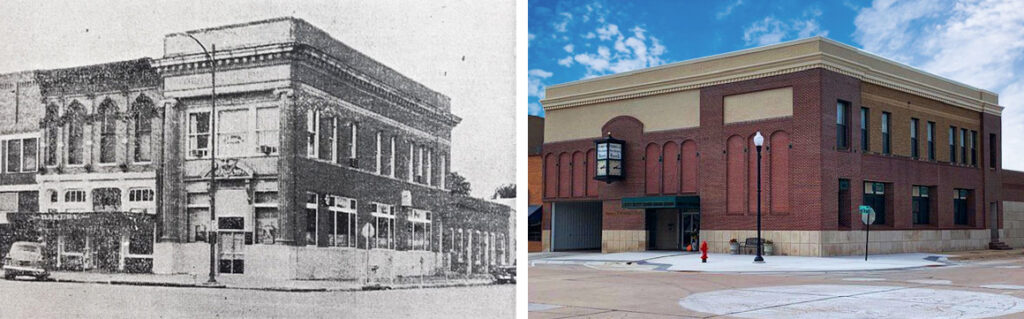
In 1879, the Bank of Superior opened just across the street from the current Farmers & Merchants Bank location. The bank moved to our current building in the early 1900s, changing ownership at about the same time. In 1929, the bank changed ownership again to become Security National Bank. Farmers & Merchants Bank purchased SNB in 1998.
The bank building has undergone several renovations, expanding into adjacent buildings. A newspaper article (right) touts one of the early remodels. You can also see how the Bank looks today, with part of its facade still visible.
Notorious in the bank’s history is a robbery that took place on November 22, 1934. The robbers, known as the “Ghost Gang,” used handguns and a submachine gun to steal almost $8,000. They made good their escape by using bank employees as human shields, forcing them to ride on the running boards of the get-away car. Law enforcement killed or arrested the gang members a few days later. However, one member of the gang eluded capture and disappeared. He was never apprehended and remained on the FBI’s wanted list until the 1960s.
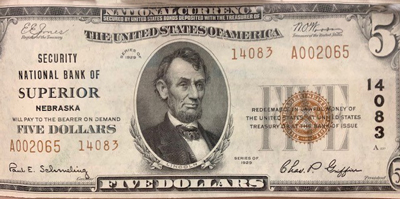
From 1863 to 1935, national bank notes were regularly issued by banks throughout the United States and its territories. The federal government would back the value of the currency, which was secured by U.S. bonds. In reaction to the Great Depression, Congress passed the Banking Act of 1933, which established the Federal Deposit Insurance Corporation (FDIC), and national bank notes were retired as currency by the federal government. We still have a piece of this history at the Bank: a couple of $5 bills from 1929. The bills came to Superior in sheets and had to be cut into individual bills, a very precise process.
Farmers & Merchants Bank, Superior Staff.
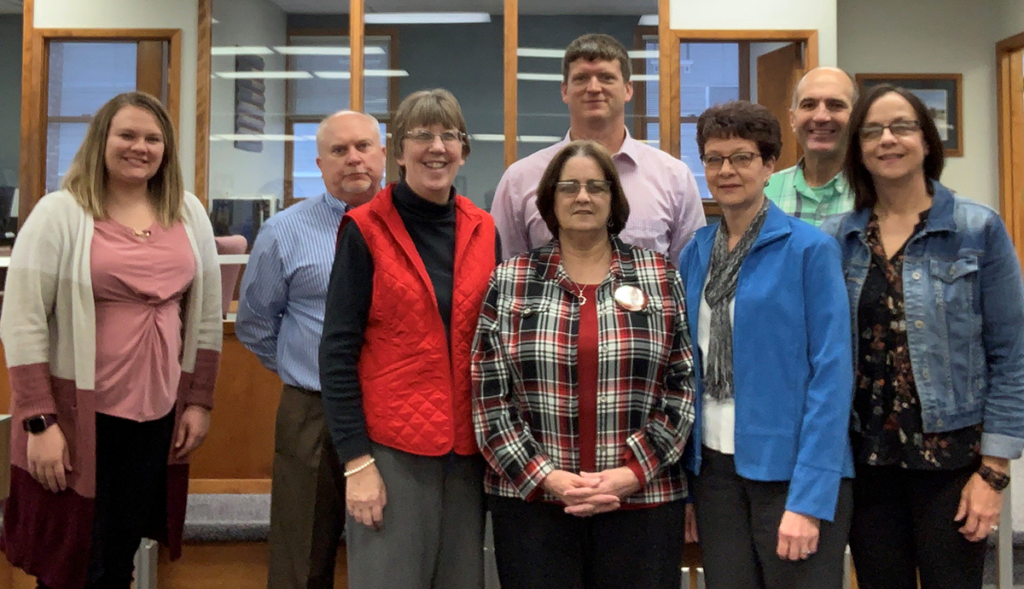
Scott Boyles is location manager and Chief Lending Officer for Farmers & Merchants Bank. He grew up “south of the border” in Jewell County, KS, and is still very active with the family farm there. He and his wife, Kristene, have three children and live in Superior. Scott is very active in the Chamber of Commerce, Teammates, Superior Youth Athletic Association, Olive Hill Church and a host of other organizations.
Rod Beam also grew up in Jewell County. He resides in Mankato with his wife DeeAnn. He has been in banking for 19 years, with the last 12 at Farmers & Merchants Bank. He enjoys Teammates, upland hunting, spending time with family and working on his farm. Rod is quick to point out the many improvements he has seen in Superior over the past 12 years, like the hospital expansion, new school and new streets, just to name a few.
Lori Clyde is Customer Service Representative Supervisor and has worked at the Bank for nearly 30 years. She grew up in Deshler and now lives in Superior with her husband Steve. They have two children and three grandchildren. Lori is an Ambassador for the Chamber of Commerce, secretary for the hospital Thrift Store, and serves on the Board of Superior Community Corporation.
Arlene Rempe and husband Ron have five children and two grandchildren. She enjoys living on the farm a few miles from town and working outdoors. She is very active in her church, where she volunteers regularly and holds the position of Vice President of the Ladies Organization. She has worked at the Bank for 14 years, enjoys interacting with customers and is quick to volunteer for all Bank activities.
Tami Lemke was born and raised on the family farm just east of Superior. She now lives in her grandparents’ house in town with her husband Lonnie. They have two children and five grandchildren. She enjoys being with family, going to sporting events and volunteering at the Crest Theatre. She is a caregiver for several disabled people within the community and looks after her parents, as well.
Dianne Blevins grew up in Trumbull, NE and lived in Hastings, Red Cloud and Colorado Springs before moving to Superior over 30 years ago. She has two daughters and four grandchildren. Dianne has worked at the Bank for 24 years. She is active in the Catholic Church and a member of the Alter Society. She enjoys local school sports and supports many Chamber activities. She regularly volunteers at the Crest Theater.
Megan Brockman grew up in Sutton, NE and now resides in Deweese with her husband Jared and son Joseph. In 2018, she graduated from Fort Hays State University with a B.S. in Ag Business. She is a volunteer on the Fairfield, NE fire and rescue and is training to be an EMT. She is a member of a number of clubs and organizations. She started a volleyball club, Nebraska Bolts, in 2019. She loves to bake, with kolaches being her favorite.
Kaylee Flaata is our student teller. She is in her junior year at Superior High School. She is a volunteer in the “After School Club,” assisting younger students. She is a member of the band and enjoys going to all of the school activities and sports. She is a big plus for us during the summer when many of the regular employees take vacations.
Randy Rhoads, Loan Officer, grew up in the Superior area. He and his wife Cindy reside on the family farm just south of town. He received his B.S. in Agriculture from Fort Hays University, then spent 14 years in ag production, 18 years in the grain industry and 6 years in ag equipment sales before coming to the Bank. He is active in the First Presbyterian Church, Sons of the American Legion and Teammates.